Full enforcement of the REAL ID Act now affects every traveler, and airports require a REAL ID–compliant license or an approved alternative for all domestic flights. Travelers must present a state-issued REAL ID, a U.S. passport, a military ID, or another acceptable form of identification at TSA checkpoints. Anyone who arrives with a non-compliant ID now moves to secondary screening or risks missing their flight entirely. Travelers should check their state’s issuance timelines and upgrade their ID well before their next trip to avoid delays.
A new $45 fee starts in February 2026 and applies to air travelers who do not have a REAL ID or another accepted form of identification at the security checkpoint. This fee pays for access to a new service called TSA Confirm.ID, which allows the agency to verify your identity using other biographical information and a biometric scan, such as facial recognition.
What the fee covers and what it doesn’t
- The fee is for a 10-day pass to cover a one-week trip.
- If you travel for longer than 10 days, you will need to purchase additional passes for the return trip.
- The fee is nonrefundable and does not guarantee passage; if the TSA is unable to verify your identity, you may not be allowed to fly.
- It is not a fee for using the TSA checkpoint itself.
How it works
- If you arrive at the security line without a REAL ID, you will be directed to a separate area to pay the fee.
- You will then complete the TSA Confirm.ID process, which may involve answering questions about yourself and/or providing a facial scan to verify your identity.
- Once your identity is confirmed, you will receive a receipt to show the screening agent and continue through security.
- The TSA notes that more than 94% of travelers already use a REAL ID or an acceptable alternative, so most will not be affected.
Airports continue expanding biometric verification, digital identity tools, and automated screening lanes, and travelers now move through security faster when they opt in. Facial recognition kiosks match identity documents in seconds, digital IDs stored in mobile wallets streamline TSA checks, and self-service bag drops reduce lines at major terminals. Travelers who stay informed about their airport’s biometric options gain smoother, quicker experiences while maintaining full control over when and how they use these technologies.
Airlines enforce stricter rules for lithium-ion batteries and other restricted items, and travelers must pack these correctly to meet updated 2026 regulations. Power banks, e-bike batteries, camera batteries, and most loose lithium cells must stay in carry-on bags, never in checked luggage. Items like smart bags require removable batteries, and hazardous goods may require special approval. Travelers who check their airline’s battery watt-hour limits and pack according to current rules avoid confiscated items, unexpected fees, and safety delays.
New liquids exemptions now support travelers with medical needs and families traveling with infants, and TSA officers allow more flexibility when screening these items. Travelers can carry medically necessary liquids, baby formula, breast milk, and related supplies in quantities above the standard 3-1-1 limit as long as they declare them at the checkpoint. Officers may swab containers or use non-intrusive screening, but they allow these supplies to travel without restriction. Families and medical travelers experience a smoother, less stressful screening process thanks to these updated rules.
TSA Change to Allowed Hair Appliances
As of August 2025: Cordless curling irons, flat irons and hair straighteners with lithium ion batteries, lithium metal or gas or butane fuel have been banned from checked luggage but can be packed in carry-on bags. If a traveler wants to pack their hair tools in their carry-on bag, they must have a safety cover to prevent them from turning on. Spare gas cartridges are banned from traveling.
TSA Update on Chargers and Lithium Batteries
Portable chargers and spare lithium-ion batteries must go in your carry-on bag and cannot be in checked luggage, as they are banned from cargo.
They must be protected from short circuits by covering terminals, and must be under 100 watt-hours (Wh) to be allowed onboard without airline approval. (Ensure that the battery or charger is clearly marked with watt-hours.
If using a power bank during a flight, it must remain visible, not stored in any bag.
The Transportation Security Administration (TSA) has ended the long-standing requirement for all passengers to remove their shoes at airport security checkpoints nationwide. This change was implemented on July 8, 2025, and is part of a broader effort to streamline the screening process and enhance the passenger experience
ETIAS for European Travel Delayed until 2026
Yes, the implementation of ETIAS (European Travel Information and Authorization System) has been delayed. It was originally scheduled to launch in 2022, but it is now expected to start in the last quarter of 2026. This delay allows for more time to implement the Entry/Exit System (EES), which is planned to be operational in October 2025.
ETIAS will be a requirement for non-EU nationals from visa-exempt countries, including the United States, for short-term stays in the Schengen Area. It is not a visa, but rather a travel authorization that will require travelers to complete an online application and pay a fee.
New Items Allowed in Carry-On Bags
In 2025, the TSA has approved several new items for travel, including those previously restricted or subject to size limitations. These include items like prescription and over-the-counter medications, ice packs, food and drink for infants/toddlers, and the list will grow throughout the year. (Check specifics for your air carrier and airport)
Here’s a more detailed breakdown of the new TSA-approved items:
Medications:
Over-the-counter and prescription medications, including those in gel, liquid, or aerosol form, are now allowed without size restrictions.
Medical Essentials:
Ice packs and gel packs for medically necessary items are also permitted, according to The Sun.
Baby and Toddler Needs:
Food and drink for infants and toddlers, including breast milk and baby formula, are allowed in any size.
Duty-Free Items:
Duty-free items sealed in a tamper-evident bag are also approved.
RealID for US Flights
Don’t Get Stuck at the Airport – REAL ID Required for All U.S. Flights!
 Who needs a REAL ID?
 Every traveler 18 and older taking a domestic flight Even if you’re not flying often, you’ll need it for future trips If your driver’s license doesn’t have a star in the corner, it’s time to update!
 How to get yours:
 Visit your local DMV with the required documents (each state has slightly different rules) Don’t wait—processing times may increase as the deadline gets closer
Travel to the UK
Effective January 8, 2025, all U.S. citizens transiting through or traveling to the United Kingdom for tourism, family visits, business meetings, conferences, or short-term study for 6 months or less will require an Electronic Travel Authorization (ETA) prior to travel.
The ETA is for all parts of the UK, including Northern Ireland and British Overseas Territories.
You will need the ETA even if you just have a layover at a UK airport, on your way to the EU or another country.
Find the latest ETA updates for the UK here.
Travel to Australia in 2025
For travel to Australia in 2025, all non-Australian citizens will need a valid passport and a visa to enter the country, meaning you must apply for a visa before traveling, regardless of your nationality; most visitors will likely need to obtain an Electronic Travel Authority (ETA) which can be applied for online.
You can find current visa information here.
Travel to New Zealand in 2025
To visit New Zealand from the United States in 2025, you’ll need:
Passport: A valid passport that’s valid for at least three months after your planned departure date from New Zealand
New Zealand Electronic Travel Authority (NZeTA): You can apply for an NZeTA on the New Zealand Immigration website. The NZeTA costs NZ$12 and is valid for two years for travelers and five years for crew members.
New Zealand Traveller Declaration (NZTD): You can complete the NZTD online at www.TravellerDeclaration.govt.nz or by downloading the NZTD app. The NZTD collects information about your travel history, health, and any goods you’re bringing into New Zealand. You must complete the NZTD before reaching passport control in New Zealand.
Delayed Flights in 2025
The U.S. Department of Transportation (DOT) announced a rulemaking “to protect passengers stranded by airlines canceling or significantly changing their flights.” This rule would require airlines to pay passengers cash compensation, rebook them for free on the next available flight, and cover meals, overnight lodging and related transportation expenses when a disruption is airline-caused. This rulemaking follows on the launch of the DOT’s “Automatic Refund Rule,” which requires airlines to provide automatic cash refunds to passengers when owed.
Edinburgh Tourist Tax
Starting on July 24, 2026: Edinburgh is set to become Scotland’s first city with a tourist tax. Edinburgh city counsellors have voted in favor of a 5% fee for overnight stays at hotels, bed and breakfasts, self-catering accommodations, and short-term homestays like Airbnb. The tourist tax is applied per night for up to five consecutive nights.
Our Role as your Travel Advisor
Updated as of April 13, 2020
In reviewing the last update that we issued, it feels like it’s been quite a bit longer than a month from our date of initial reporting.
We have hunkered down, as have all world citizens, and are adjusting to the reality that may stay with us for a little longer. I hope that you will see that we are all doing well!
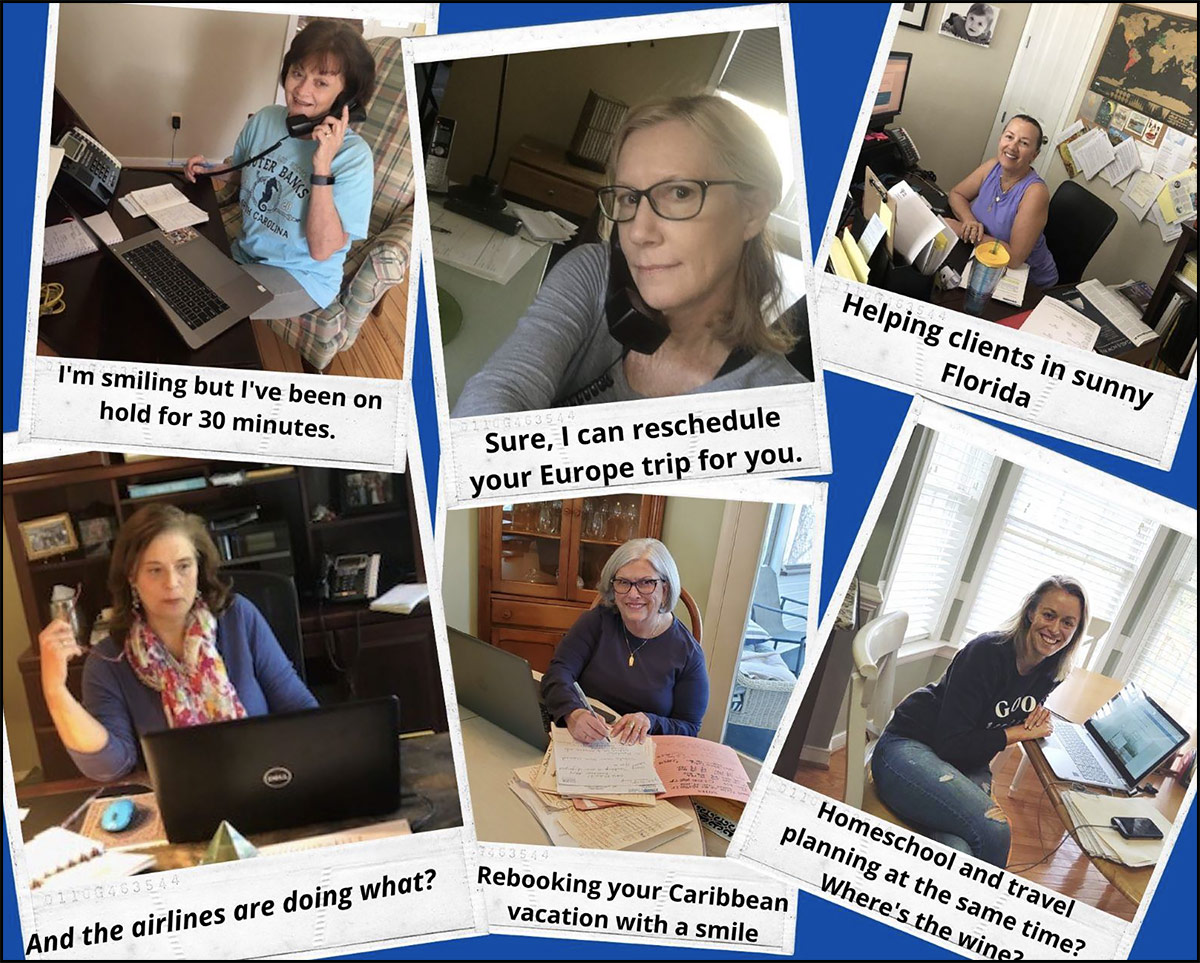
At the moment, we are still busy handling rescheduling of vacations and dealing with the “what ifs” of our current state. With media briefings overwhelming and interrupting our regular day to day activities and travel lives, our job is still to be your travel advisors.
- To be as objective as possible when directing you to fact filled sites.
- To keep you updated on vendor policies so that you can choose whether to reschedule or cancel your trips.
- To advocate for you in minimizing any financial losses incurred by this travel nightmare.
- To encourage dreaming while sheltering in place of the next part of the world to visit.
- To be confident that this too shall pass.
- To remain hopeful that something good and positive will emerge from this devastating pandemic.